




The Tour du Mont-Blanc can be hiked in 5 to 12 days, depending on your fitness and the pace you are after. Sporty trek or more contemplative route, the number of days directly shapes the effort and the experience. With around 170 km around the massif, across France, Italy and Switzerland, the TMB is most often completed in 7 to 10 days — an ideal basis for planning your itinerary.
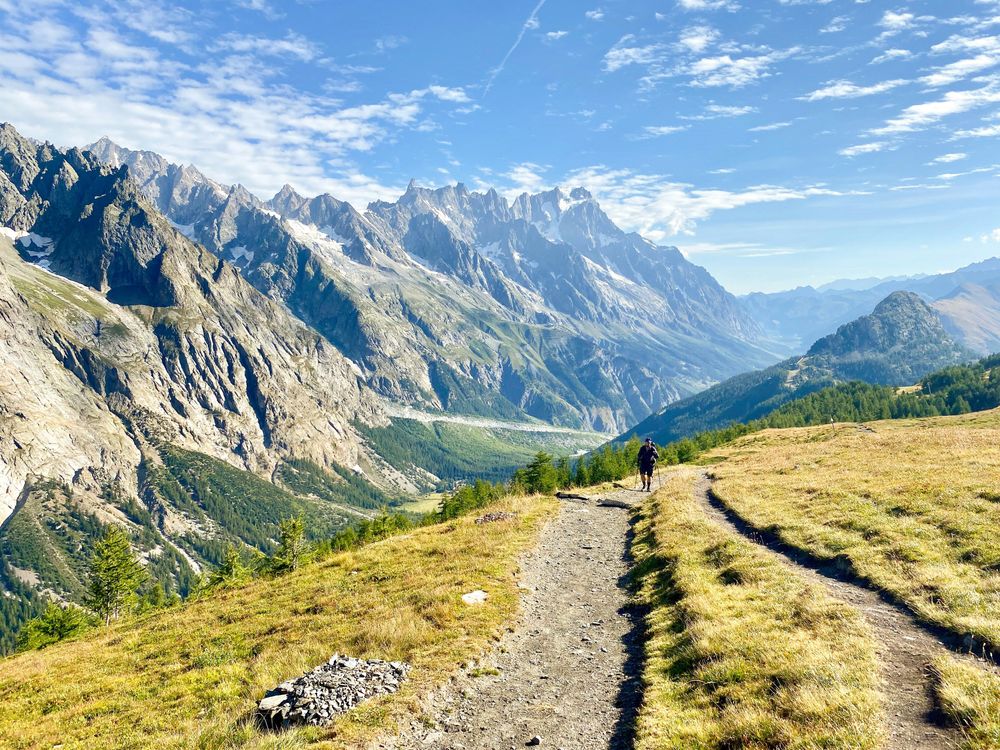
The Tour du Mont-Blanc in figures
The Tour du Mont-Blanc is a long-distance trek of roughly 170 km with close to 10,000 m of ascent.
The difficulty does not come from any technical section, but from stringing together day after day of ascent with a pack on your back.
- Over 7 days: around 24 km and 1,400 m of ascent per day (sporty pace)
- Over 10 days: around 17 km and 1,000 m of ascent per day (balanced pace)
- Over 11-12 days: shorter, more comfortable stages
Every itinerary is different: some stages are easy going, others far more demanding. What matters is choosing a pace suited to your level, allowing for the weather and managing your breaks to avoid getting tired.
However, averages never tell the whole story. Some stages are long but relatively easy-going, while others are shorter but steep. The difficulty of the TMB comes less from any single technical section than from the accumulation of consecutive days of hiking. Weather, fatigue and other issues (blisters, pain, etc.) can significantly increase the time needed to complete a stage. Hiking for 6 to 8 hours with a backpack, then doing it all again the next day, requires genuine endurance.
If you are not sure you can manage 7 consecutive days of hiking, why not split the itinerary into two parts (the northern loop one year: Chamonix / Courmayeur / Champex / Trient; the southern loop another year: Chamonix / Les Contamines / Les Chapieux / Courmayeur)? A bus service runs daily between Chamonix and Courmayeur during the high season.
The TMB in 7 days: the classic sporty pace
Hiking the Tour du Mont-Blanc in 7 days is for regular hikers who are already comfortable with long days in the mountains. It calls for good endurance, the ability to absorb the ascent and, above all, to recover from one day to the next.
The pace is demanding: around 24 km a day and more than 1,400 m of daily ascent on average. That means days can easily exceed 7 hours of walking, breaks not included. The successive descents can become as demanding as the climbs, particularly for knees and ankles.
This format has several advantages. It fits into a single week off, gives a real sense of sporting achievement and lets you link the great stages of the TMB without stretching the logistics. It suits fit hikers who want an intense crossing.
On the other hand, it leaves little margin. Difficult weather, a blister, a sore knee or a bad night in a refuge can quickly weigh on the rest of the route. For a first TMB this breakdown is possible, but it should be chosen with clear eyes. If you are hesitating between 7 and 10 days, the 10-day format will often be more comfortable.
The TMB in 9 to 10 days: the hiker's balance
Splitting the route over 9 or 10 days is often the most balanced way to discover the Tour du Mont-Blanc in good conditions. It remains sporty, because the TMB is still a mountain trek, but it offers a better balance between effort, recovery and enjoyment.
Over 10 days, the average day comes to around 17 km and 1,000 m of ascent. That pace suits hikers in good physical condition, even without experience of ultra-long distances. It allows several hours of walking a day while leaving time for lunch, for stopping at the passes, enjoying a viewpoint or reaching the refuge without rushing.
It is also the most sensible format for a first long-distance trek. It spreads the effort more evenly, avoids stages that are too unbalanced and keeps a margin in case of fatigue. Refuges then become genuine recovery time rather than mere waypoints.
To make the most of this format, the itinerary needs care. The aim is not simply to « fit » the stages into 10 days, but to create a logical progression: a first section to find your legs, a more panoramic Italian crossing, a well-anticipated Swiss section, then a return to the Chamonix valley without finishing exhausted.
The TMB in 11 to 12 days: the discovery format
Completing the Tour du Mont Blanc in 11 or 12 days is ideal for those who want to fully enjoy the route. It is particularly suitable for families, active seniors, beginners or hikers who prefer to walk for less time each day and make the most of the overall experience.
With this itinerary, the stages are shorter and more flexible. It becomes easier to adapt to changing weather conditions, take longer breaks, spend time observing wildlife, visit a village or chat with refuge wardens. This format also makes it easier to plan a lighter day after a particularly demanding stage.
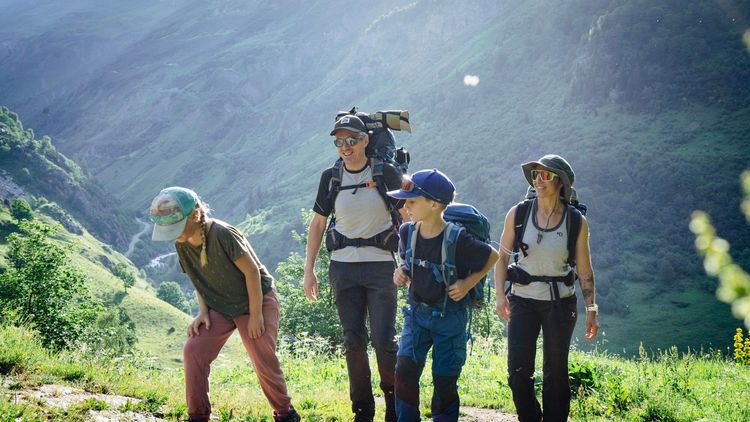
For families, this duration is often the most appropriate. Children need breaks, motivation and a less consistent pace than adults. For active seniors, it helps reduce strain on the joints and maintain a comfortable hiking experience. For beginners, it reduces the risk of becoming overwhelmed by the cumulative effort.
The main disadvantage is logistical: more nights in refuges mean a higher budget and more time required to complete the trek. But if your goal is to fully experience the TMB rather than simply "complete" it, this format is often the most rewarding.
How do you choose the right duration?
To choose your duration, ask yourself three simple questions. First: am I able to walk for several days in a row with significant ascent? Second: do I want a sporty trek or a more gradual experience? Third: how much margin do I want to keep in case of fatigue or difficult weather?
If you are very fit and used to the mountains, 7 days can make sense. If you are new to long-distance hiking, or if you want a good balance, go for 9 or 10 days. If you are travelling as a family, with children, or if you want to take your time, choose 11 or 12 days.
In every case, avoid thinking only in terms of the number of days. Look also at distances, ascent, available accommodation and escape options. A good TMB itinerary is a realistic one that flows and matches your level.

Ready to build your Tour du Mont-Blanc?
Move from theory to practice: discover the full route, the refuges and the tools to organise your trek stage by stage.