



The story of the Tour du Mont-Blanc is told through its passes. They set the rhythm of the trek, mark the borders and offer the views you still remember ten years later. Here is an overview of the crossings not to be missed.
The Col du Bonhomme and the Croix du Bonhomme
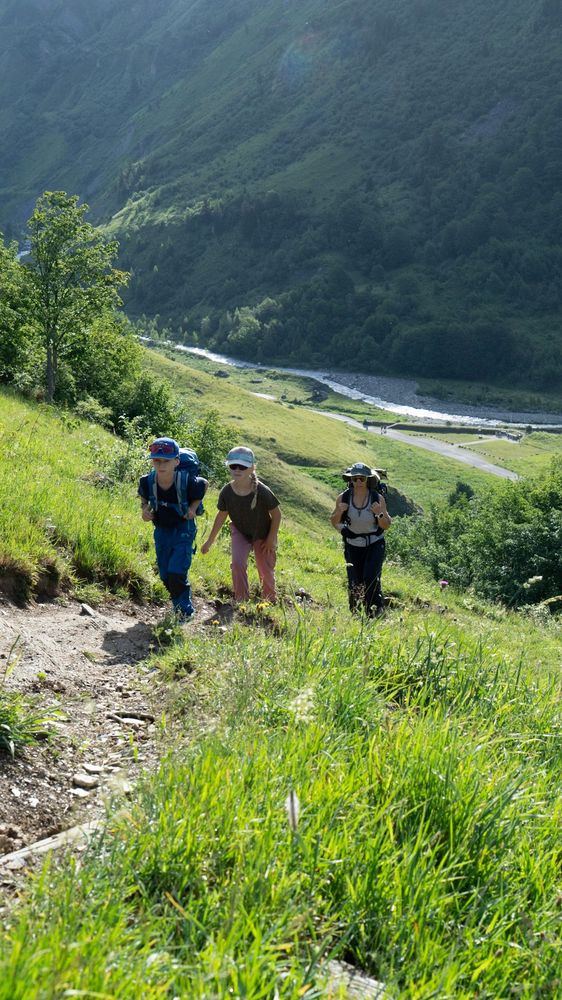
The Col du Bonhomme (2,329 m) and the Col de la Croix du Bonhomme (2,479 m) are among the best-known passes on the French side of the Tour du Mont-Blanc. They sit on the stage that usually links the Les Contamines-Montjoie area to Les Chapieux, in an increasingly alpine setting.
The climb is long and gradual. It calls for endurance, especially with a multi-day pack on your back. The landscape shifts as you gain height: the mountain pastures gradually give way to a more mineral scenery, typical of the great mountain crossings.
This sector can be exposed in bad weather. Mist, wind or rain quickly change how the terrain reads. It's therefore important to set off early, check the forecast and keep a warm layer within reach.
Crossing the Col de la Croix du Bonhomme is often felt as the real entry into the high-altitude TMB. It marks a first major shift, physical as much as mental, into the trek.
The Col de la Seigne: crossing into Italy
The Col de la Seigne is one of the emblematic passes of the Tour du Mont-Blanc. It marks the natural border between France and Italy. From the French side, the climb leads gradually up to a broad high-altitude col before opening onto a spectacular view of the Italian side of the massif. It's often one of the strongest moments of the whole route. As you reach the col, the landscape changes scale. The glaciers, the aiguilles and the Italian valleys make up a setting very different from the French side.
The Col de la Seigne stands at over 2,500 m. Early in the season, patches of snow can still linger on some of the higher sections, which calls for care and suitable equipment.
To make the most of this crossing, it's best to set off early and avoid reaching the col in the middle of the afternoon, particularly if storms are forecast. In the mountains, weather conditions can change fast. It's advisable to check the local forecast before committing to an exposed route.
The Grand Col Ferret
The Grand Col Ferret (2,537 m) is generally considered the highest point on the classic Tour du Mont-Blanc route. It marks the border between Italy and Switzerland and offers a spectacular transition between the Italian Val Ferret and the Swiss Val Ferret.
The climb is steady but demanding. It requires you to pace yourself, especially if it comes after several days of walking. At the top, the view opens onto the big relief of the Swiss side and gives a powerful sense of tipping over into a new part of the Tour.
The descent to La Fouly is long and can be hard on the knees. Poles are particularly useful on this section. You also need to be careful not to switch off completely once the col is behind you: a lot of fatigue builds up on the way down.
This pass captures the spirit of the TMB perfectly: effort, a border crossing, a wide-open view and the feeling of making your way around an immense massif.
The Fenêtre d’Arpette
The Fenêtre d’Arpette (2,665 m) is a legendary variant of the Tour du Mont-Blanc, in Switzerland, between the Champex and Trient areas. It's often regarded as one of the finest variants on the route, and also one of the most demanding.
It's a difficult variant, with a longer and more committing route than the classic crossing via the Col de la Forclaz. In particular, it offers a remarkable view of the Trient glacier.
This variant shouldn't be taken lightly. It's aimed at seasoned hikers in good physical condition, comfortable on rocky ground and long descents. In bad weather, mist, wet ground or advanced fatigue, the classic route is the wiser choice.
The Fenêtre d’Arpette is a fine option for anyone wanting to add a more alpine day to their TMB. But it should remain a considered choice, not an obligation.
Tips for crossing the TMB passes safely
To approach the passes with peace of mind, set off early. It keeps you clear of the hottest hours, leaves a margin in your schedule and limits your exposure to late-afternoon storms.
Always check the forecast the evening before and again in the morning. Ask the refuge wardens for advice too: they know the local conditions, any snow patches, the exposed sections and the frequent changes in the weather.
Keep a warm layer and a waterproof jacket accessible. At the top of a col, the wind can chill you quickly, especially after a climb where you've been sweating.
Finally, know when to turn back. A col isn't going anywhere. If conditions are poor, if fatigue is too great or if the route feels uncertain, changing the stage is always a responsible decision.

Ready to build your Tour du Mont-Blanc?
Move from theory to practice: discover the full route, the refuges and the tools to organise your trek stage by stage.